The Machine
Control
The one signal every element listens to, the bridge that sends it, and the ways to drive it: from a laptop to a console of buttons, for a performance or an installation.
Shared by every controller
The system
How the one signal works: timing, safety, the approaches considered, wiring an element to listen, and the first test.
In Chrome, with the bridge on USB
The Conductor
Write a piece for the elements and play it on them: a track for each element, its notes by name, and a preview of how it sounds.
The bridge and the ways to drive it
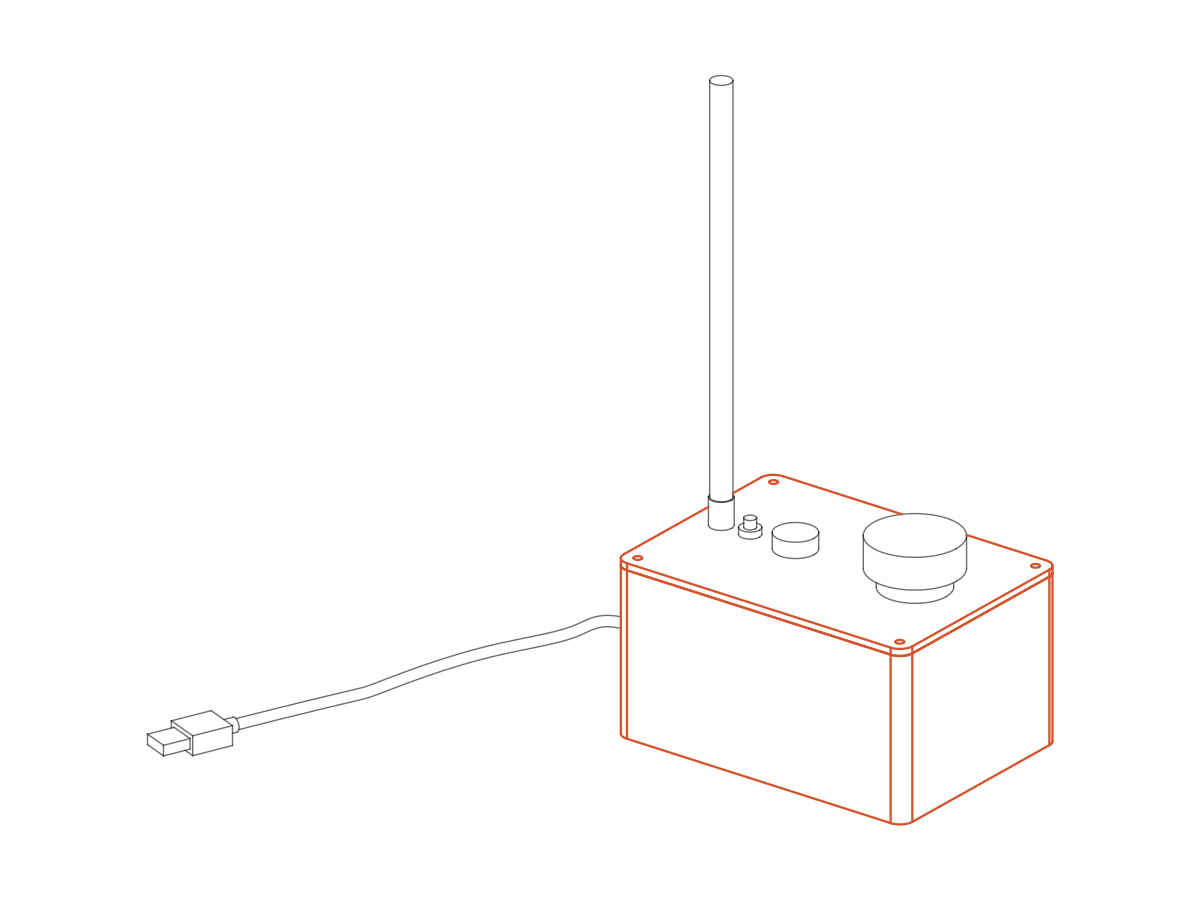
Bridge
The one board that transmits: an ESP32-S3 in a small printed box, with an antenna up high, a stop button, an activate button and a status light. Every controller is built on it.
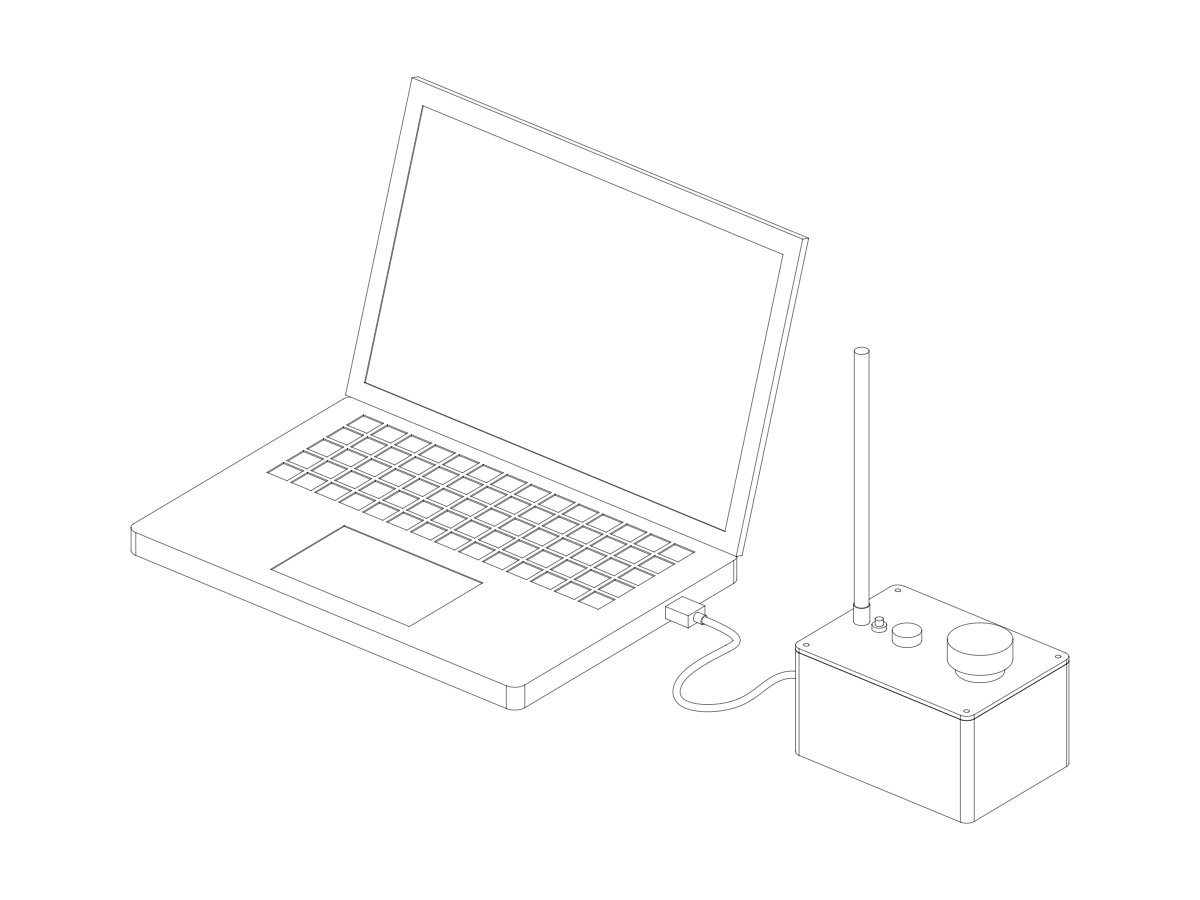
Laptop
The bridge plugged into a computer, playing a piece written in ordinary music software. Composing, rehearsing and the live sequencer start here.
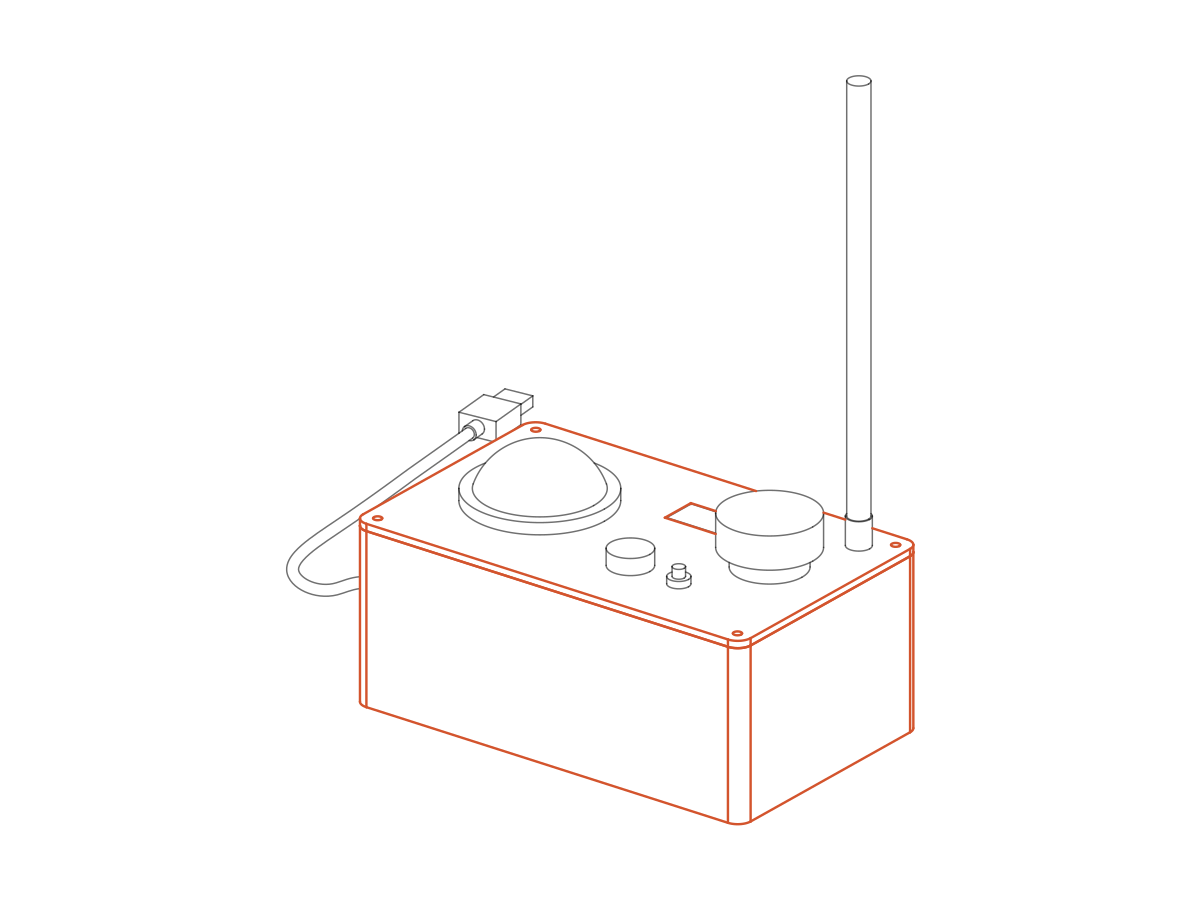
The Button
One big button steps through a written piece: bring in the drums, lock at the next bar, start the teardown. The piece is stored on the bridge, so there's no computer on stage.
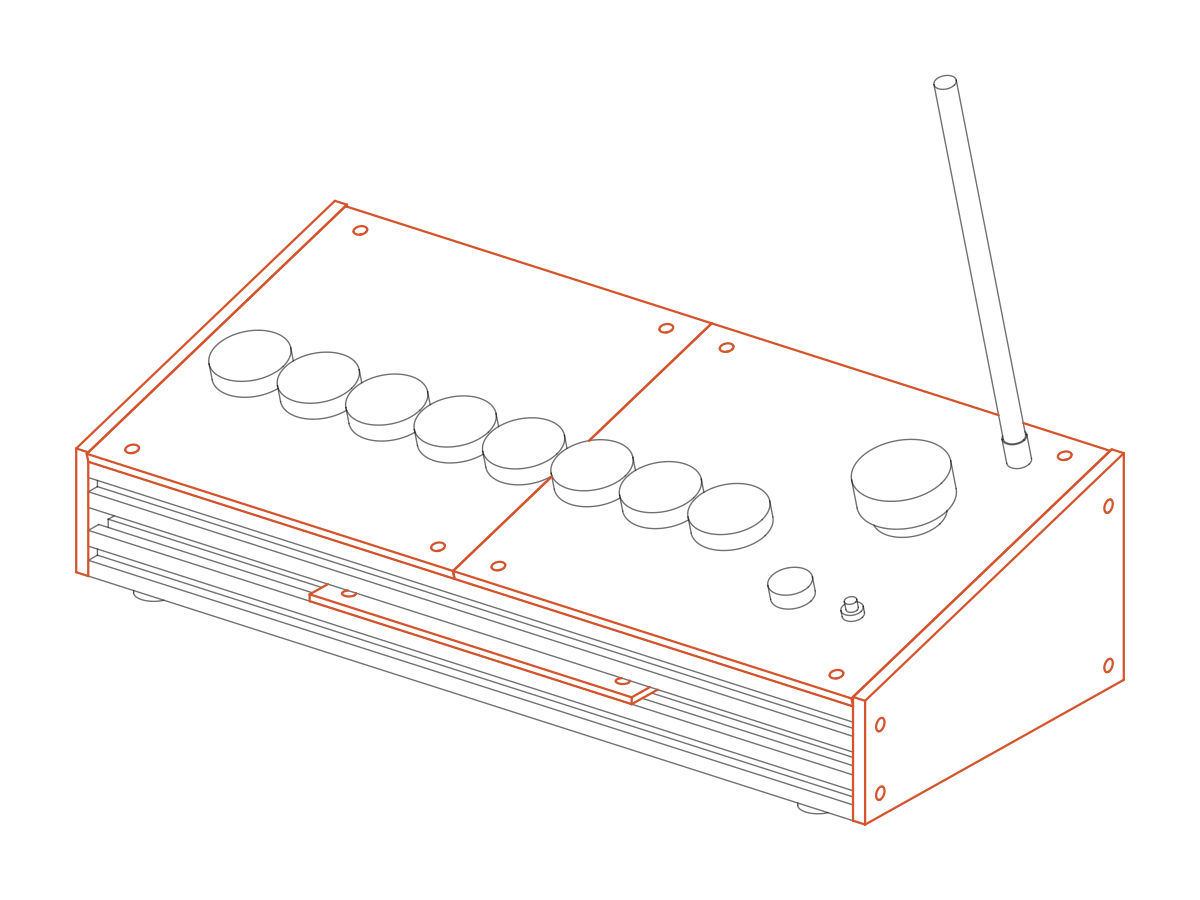
Set List
A button for each piece. Press one and the ensemble moves into that song from the next bar line, so the order is chosen live.
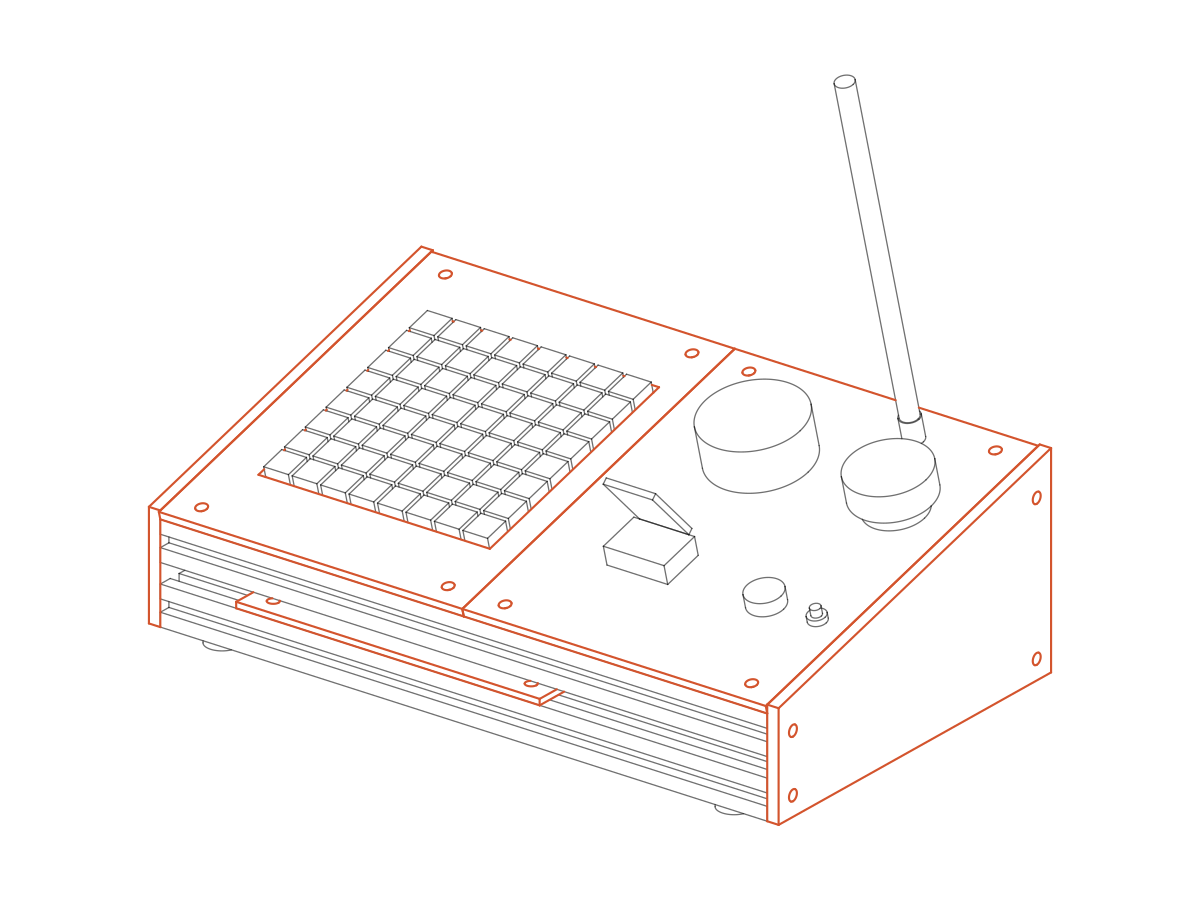
Loop Grid
A button for every loop of every element, and a master tempo. Whoever plays it is performing the ensemble, not running a score.
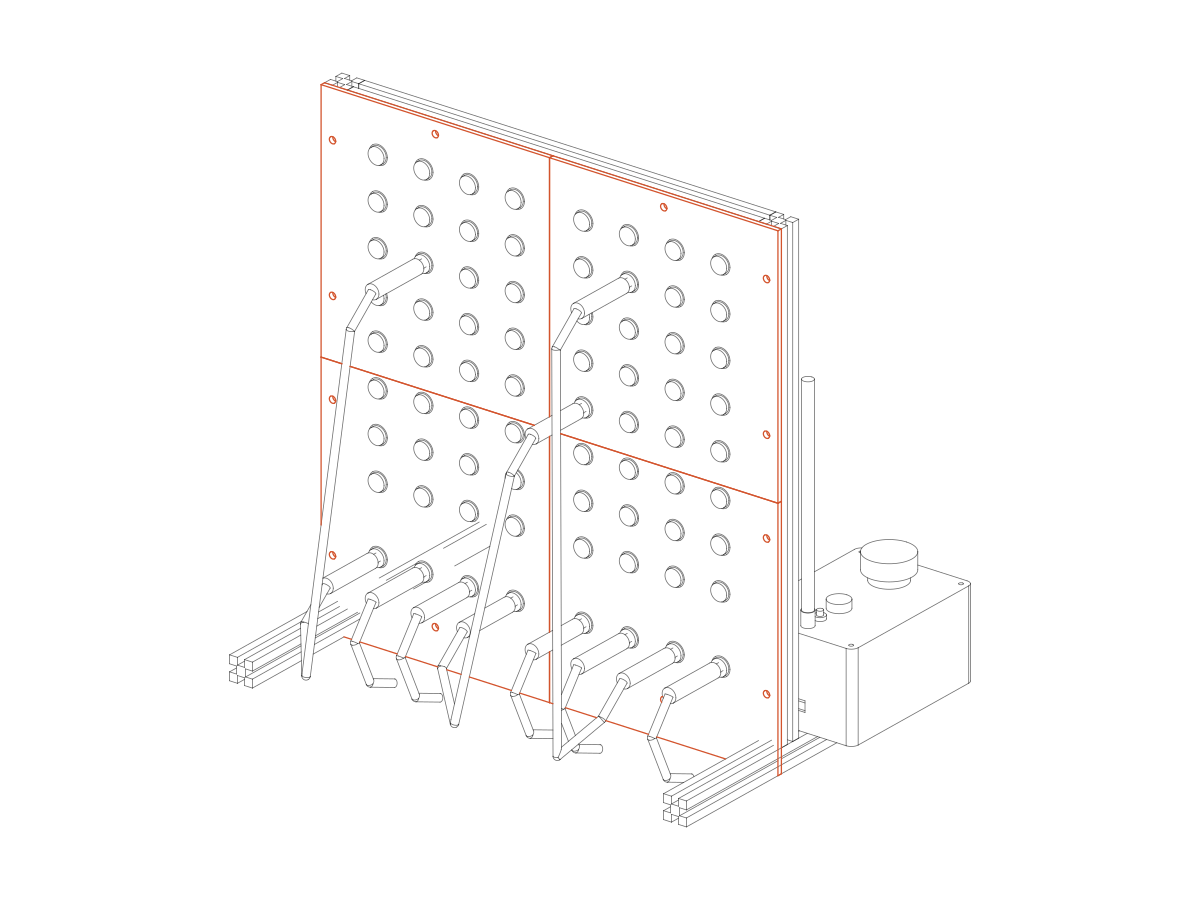
Switchboard
Patch cords between elements and loops, like an old telephone exchange, for an installation that visitors play.